
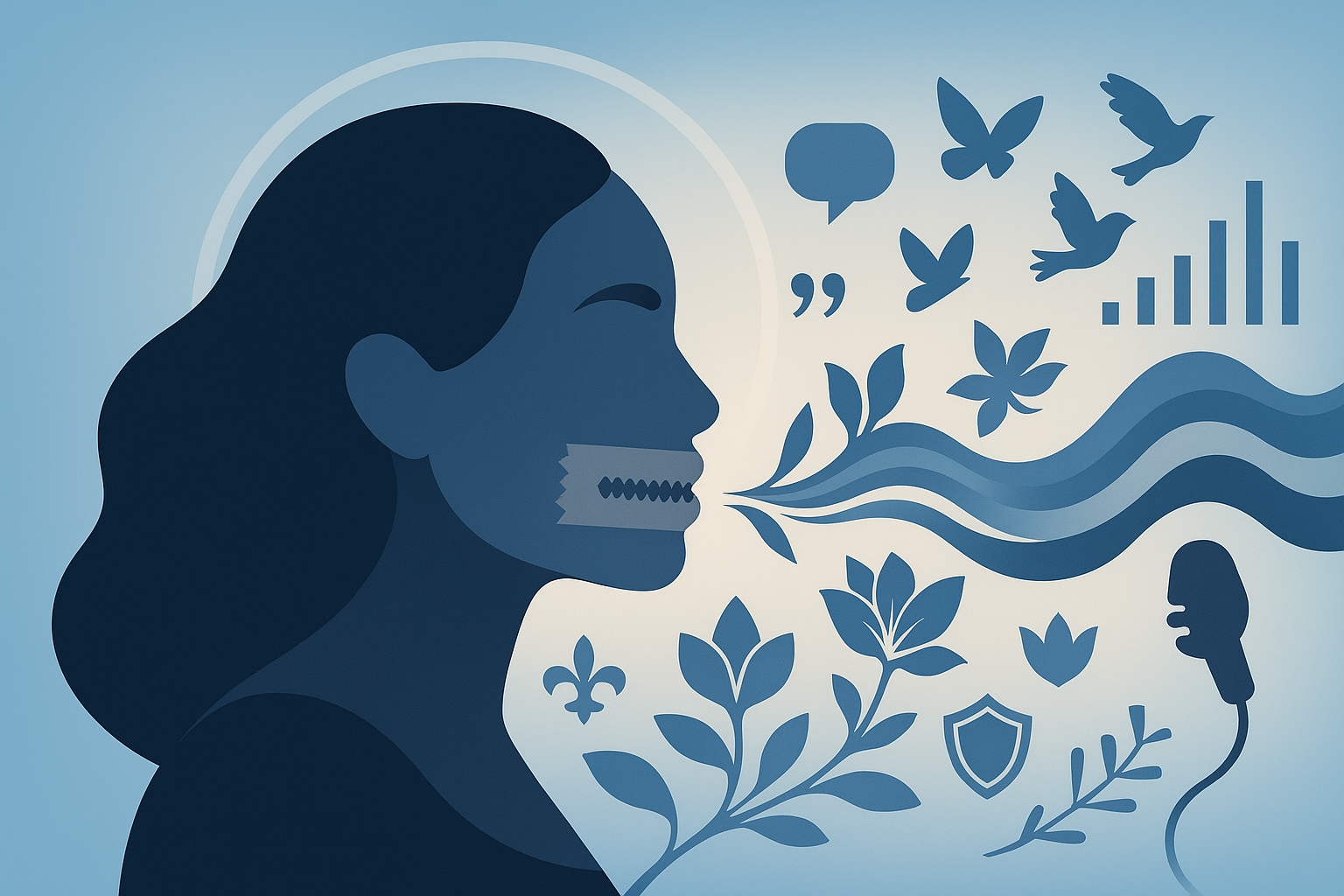
Silence, voice, and the experiences of Black women
Context
Recent scholarship demonstrates that Black women in academic and professional settings routinely experience gendered-racial microaggressions known as subtle, cumulative insults shaped by the intersection of race and gender. A recent incident in which I was told to “stop writing” and “stop taking notes” reflects a broader pattern of silencing that has both historical roots and contemporary implications.
Key Insights from the Literature
Perceived Gendered Racial Microaggressions
Black women experience a unique form of marginalization distinct from that of Black men or White women. These microaggressions, whether overt or subtle, undermine professional authority and belonging, often forcing difficult choices between speaking up or remaining silent (Lewis et al.).
Silence, Voice, and Tempered Radicalism
Bell, Meyerson, Nkomo, and Scully (2003) demonstrate that Black women are often compelled to use voice strategically, while White women more often resort to silence. The act of silencing Black women echoes a longer struggle over whether White colleagues will be allies or passive bystanders.
Breaking Silence and Talking Back
Owens, Edwards, and McArthur (2018) draw on bell hooks’ notion of coming to voice, showing how Black women researchers resist exclusion and deficit narratives by documenting lived experiences. Speaking back challenges elite discourses that historically silence Black women’s expertise.
Journaling as Healing and Resistance
Smith, Kelly-Morris, and Chapman (2021) describe journaling as a racial storytelling practice that fosters self-love, healing, and resilience while resisting erasure. It becomes a liberatory tool for reclaiming narrative and affirming Black identity.
Historical Roots of Silencing
Gundaker (2007) and Monaghan (2000) trace how, under slavery, enslaved Africans pursued hidden education despite prohibitions. Reading was sometimes tolerated, but writing was seen as dangerous because it enabled autonomy. These restrictions reveal how silencing has been systematically enforced to prevent Black agency.
The Angry Black Woman Stereotype
Jones (2023) finds that Black graduate women often self-silence in response to microaggressions, fearing they will be labeled as angry if they assert themselves. While protective in the moment, this silence contributes to invisibility and psychological harm.
Implications
Silencing Black women, whether it is through explicit directives or implicit stereotypes continues a long history of controlling voice and erasing agency.
Strategies such as journaling, storytelling, and collaborative resistance provide avenues for reclaiming voice, but structural change is required to shift the burden away from individuals.
White colleagues, especially in leadership, must recognize the cumulative harm of silencing and engage as active allies rather than passive bystanders.
Conclusion
The directive to “stop writing” and “stop taking notes” reflects more than an isolated interpersonal conflict; it is situated within a broader historical and scholarly context of silencing Black women’s intellectual labor. Grounded in this scholarship, the incident underscores the need for conscious engagement, accountability, and structural transformation to ensure that Black women’s voices are not diminished but respected as vital to institutional progress.
References
Bell, E. L. J. E., Meyerson, D. E., Nkomo, S. M., & Scully, M. A. (2003). Interpreting silence and voice in the workplace: A conversation about tempered radicalism among Black and White women researchers. The Journal of Applied Behavioral Science, 39(4), 381–414.
Gundaker, G. (2007). Hidden education among African Americans during slavery. Teachers College Record, 109(7), 1591–1612.
Jones, A. M. (2023). Self-silencing as protection: How the “angry Black woman” stereotype influences how Black graduate women respond to gendered-racial microaggressions. Equity & Excellence in Education, 57(1), 47–61. https://doi.org/10.1080/10665684.2023.2201480
Monaghan, E. J. (2000). Reading for the enslaved, writing for the free: Reflections on liberty and literacy. Proceedings of the American Antiquarian Society, 110(2), 309–341.
Owens, L., Edwards, E. B., & McArthur, S. A. (2018). Black women researchers’ path to breaking silence: Three scholars reflect on voicing oppression, self-reflexive speech, and talking back to elite discourses. The Western Journal of Black Studies, 42(3–4), 125–140.
Smith, D., Kelly-Morris, K., & Chapman, S. (2021). (Re)Membering: Black women engaging memory through journaling. Urban Education, 57(10), 1673–1698. https://doi.org/10.1177/00420859211003932
